
Cyclists turned frontline workers
How a community of Kurdish Alevi cyclists offered a life line to families worst hit by the Covid pandemic.
By Hilal Seven
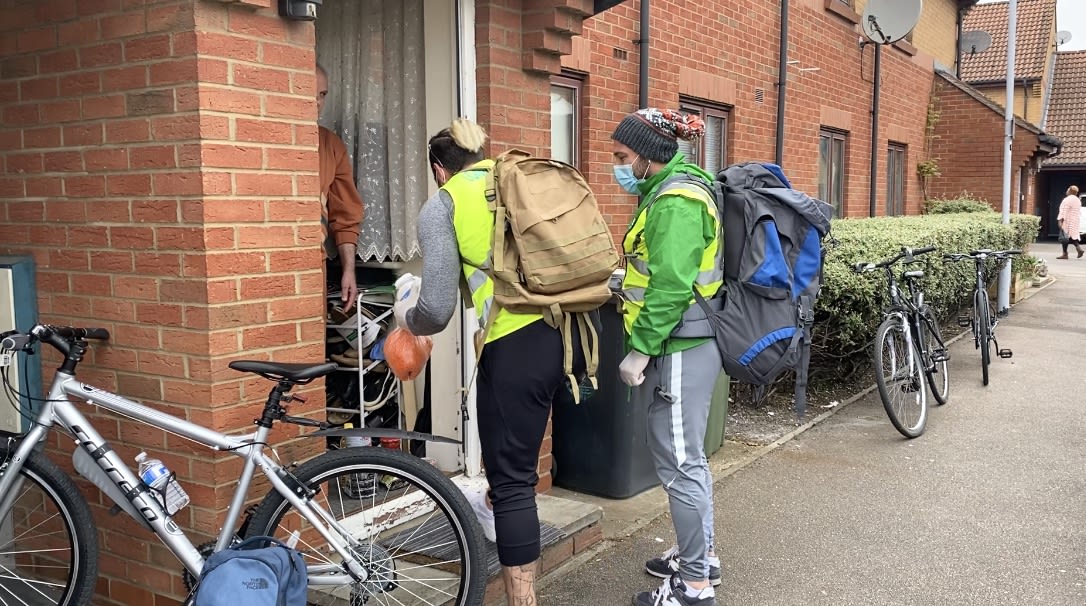

In the Spring of 2020 Özgür Korkmaz, a Kurdish Alevi community activist and founder of cycling group the Londra Bisiklet Kulübü, started a bike delivery service in response to the disproportionate impact of Covid-19 on the Kurdish and Turkish communities in London.
Korkmaz set up this community delivery service to support the most vulnerable people in his community, such as those with health conditions, families or those without the immigration status necessary to access UK government support.
The Kurdish and Turkish communities, like other minority ethnic groups in the country, have been badly hit by the virus. The dead include a disproportionate number of people from this community.
In part this is because many in the community suffer with pre-existing health conditions and face barriers to accessing health and social services. Many also live in overcrowded conditions, in multi-generational homes in low-income areas of the city.
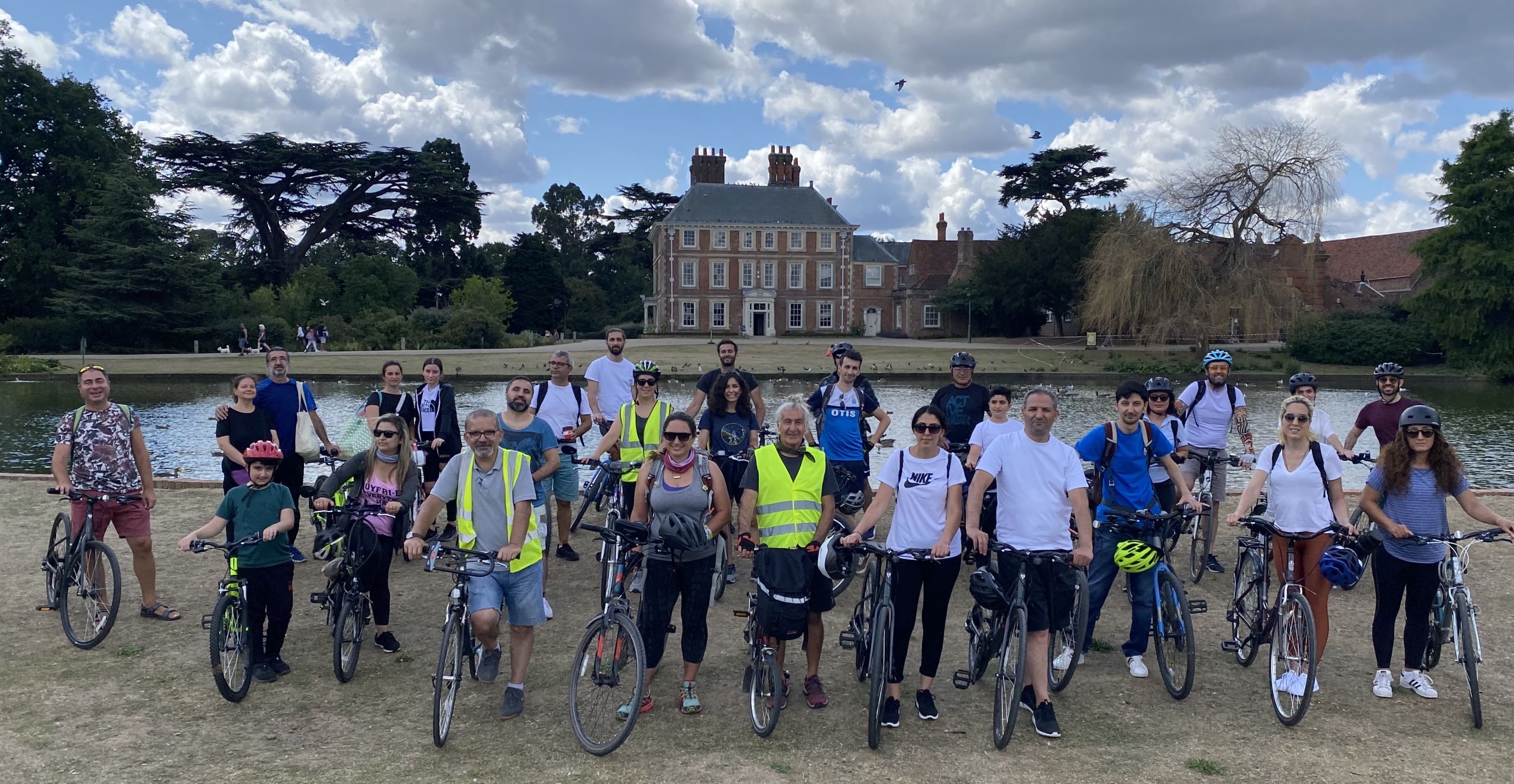
Korkmaz, a father of two from Enfield, decided to do something about what was happening in his community. It helped that he always loved cycling, and was an experienced amateur cyclist. In 2018, he cycled all the way from London to Istanbul, an epic journey that took him 46 days to complete.
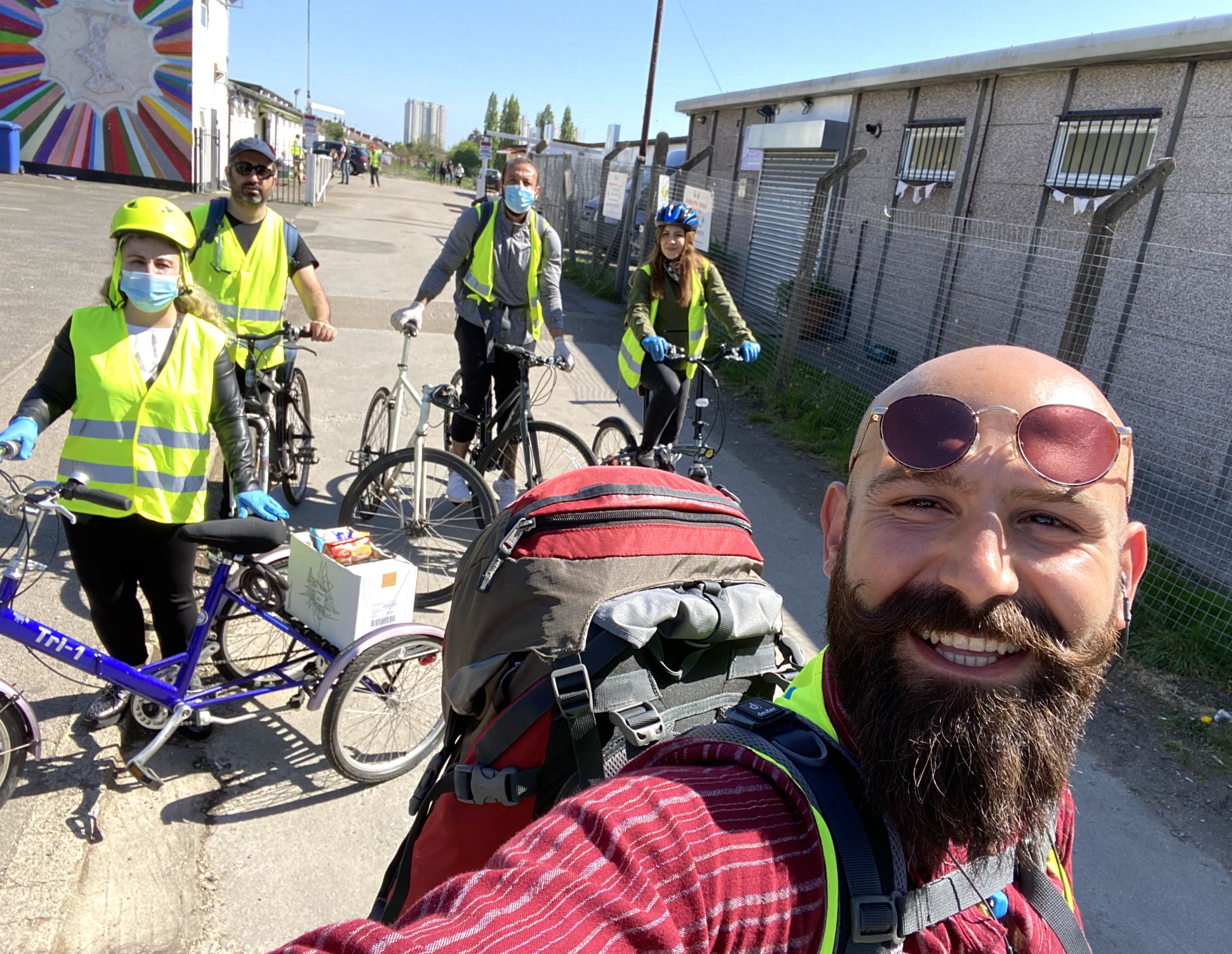
Korkmaz realised that he could not do this alone, so he recruited other volunteer cyclists from the community to support his initiative.
“We delivered food packages from 9 am to 5 pm every day for 3 months,” he said.
They were able to not only assist thousands of people in their community, but also people from right across London.
Korkmaz organised the delivery service out of the Britain Alevi Federation (BAF) community centre in Edmonton. The BAF gave them the space to store and prepare the food packages ready for delivery.
The food packages included a variety of essential items such as vegetables, fruits, rice and oil. These were donated by Kurdish and Turkish shopkeepers in Green Lanes, Enfield and other areas of north London.
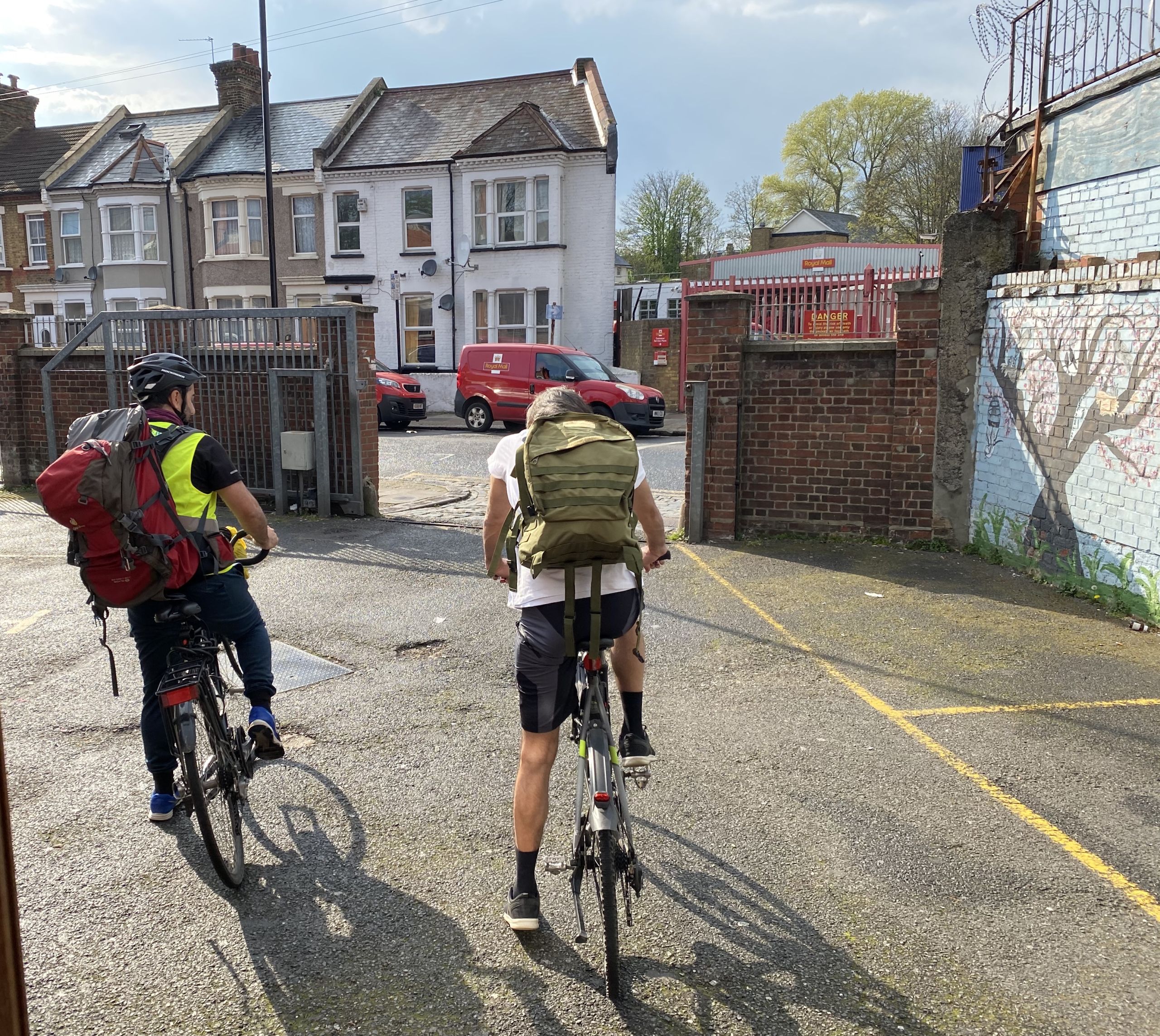
Korkmaz and his team of volunteer cyclists would then zoom on their bikes through London to deliver these food packages to those in need.
One of the people supported by Korkmaz is Güler Yuksel, a Kurdish art tutor and actress.
She lost her work because of the lockdown and could not access government support.
“Like many other self-employed people, I could not get any support from the government support schemes,” she said.
Instead, she was forced to rely on regular food deliveries from Korkmaz’s team.
“I got food packages from them during the lockdown, not being able to work or get financial help was not easy at all.”
Despite the support Yuksel got from Korkmaz, in the end her financial woes forced her out of London.
She could not afford to pay her rent and had to leave for Istanbul to her parent’s home.
She is now stuck there, but if her financial situation improves, she would like to return to her old life in London. “If I can rent a room again, I will come back to London.”
Korkmaz is proud of the work he and other riders undertook last year. When he thinks about what they were able to achieve, he is overcome with pride and emotion that their service helped so many people in desperate circumstances.
But he feels there has not been enough media coverage of initiatives like his and those from other ethnic communities in London.
The chairman of BAF İsrafil Erbil agrees with Korkmaz. He says there should be more coverage of positive initiatives like this in the UK mainstream media.
“We not only helped people from our community, but we also supported many others. We have records of 7,500 families that food packages were delivered to at their homes at least once,” he said.
Erbil says that even Haringey Council reached out to them and asked for their help in delivering food packages to vulnerable residents.
“We have delivered food packages to 200 registered people,” he said.
Erbil feels that Korkmaz’s work during the pandemic should get wider attention because it helped so many needy people.
“We had moments where people cried and thanked us for being there with them, it was an unforgettable time though,” he said.
For Korkmaz at least this has been a rewarding experience he will fondly remember.
“I think that was a great time for Kurdish people in the UK,” he said.
Hilal Seven studied business at Istanbul University. Her journalism focuses on migration in Turkey and the Middle East. She has worked with international journalists from all over the world reporting on the impact of the Syrian’s civil war. In 2016 she moved to the UK, where she has attended an internship with Marie Claire UK, in which one of her stories was long listed for One World Media Awards. She has produced a radio programme called Ezber Bozan. She is a participant on the Refugee Journalism Project.
Follow her on Twitter @HillSevn
All images are provided by the author and subjected to copyright.



 Built with Shorthand